The production was quite important. DCC, they’re retouchers, really high-end image specialists, and then also printers. One of the things we wanted to do is also really push the production of each DV.
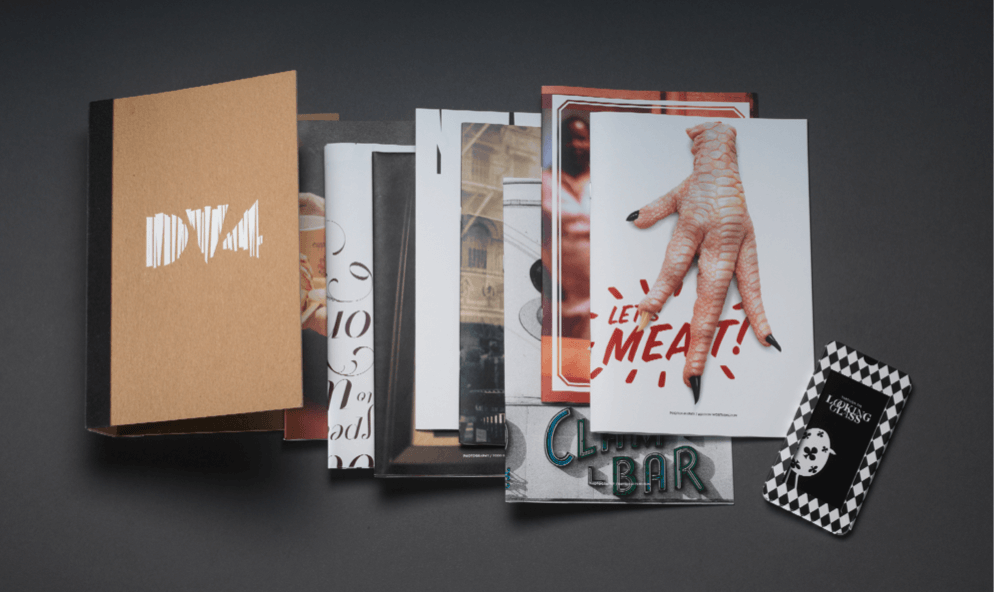
For DV4, we did a really interesting binding technique, where we took the kind of cardboard you use inside of books, but we used the raw cardboard. We took black book tape, and used that to bind the hinges. It was three pieces of cardboard that we bound with black book tape, and then with a white stamp, we stamped the logo for DV4 on top of it. Within that, each book was an individual book, and they came in different forms: some folded out, some are perfect bound.
The one for the Holy Apostles Soup Kitchen, each page of the book was slit into three, so you can change the different aspects of it and create faces, because the idea there was everybody benefits who works with the organization, so we wanted to be able to switch people’s faces and combine them. This showed how everybody fits together, which you can imagine was a nightmare to make. We try to push everything that way. Each book is different, and then we held the whole thing together with an industrial rubber band around it, and then the whole thing was wrapped in butcher paper. We took books to a butcher in Brooklyn and had them wrap the books for us, so then we could take that—because there’s a way butchers wrap things; it’s so special that we want to make sure we got it right. They wrapped three books for us, and we took it back to the production crew at DCC and we said, “Okay, match the way this is folded.”
Steve Pandolfi, being as crazy as he is, wanted to wrap it with butcher paper, but we wanted to also print on butcher paper. We printed on white butcher paper, and then we glued that to brown butcher paper. So the whole thing is wrapped with brown butcher paper, but when you open it up, there’s images printed on it, which was a big fold-out poster with all kinds of pieces of meat. It’s interesting, because the designer who worked on it is a vegetarian and she was having so much fun with these raw pieces of meat.
When you unwrap the edition and see pieces of meat, it sets the tone for a little bit of shock. You want people to know you’re going to see something different. First of all, it’s beautiful, so in the end, nobody would say it was just for shock value. But you also want to wake people up and say, “Okay, this isn’t going to be your normal experience.
With the production, we push it in every way we can. We did duotones on a digital press, which you’re not supposed to be able to do. We did all sorts of things as far as pushing the printing.