
We sat down with Oya Demirli, our futurist extraordinaire, to find out how Augmented reality (AR) is changing advertising, social media, and how consumers interact with brands and their products.
Oya drops some knowledge on how AR is disrupting the way we conduct business moving forward into a post-COVID-19 world.
Read our interview below to learn how COVID-19 has increased the need for AR, and how companies can prepare to take advantage of the many benefits that result from improving the consumer’s experience with AR.
OTTO: What is AR, and what kind of impact will it have on advertising?
Oya Demirli: Augmented reality is the ability to superimpose spatially-registered digital content on the real world surrounding the user. That is to say, AR adds an overlay to what you see with your naked eyes, rather than replacing it.
AR doesn’t block out the real world or replace it entirely with a digital one. It adds to the physical world reality that you would ordinarily see, rather than replace it. It lets the real world location you are in show through, only with digital objects or information superimposed on top of the physical world. Pokemon Go is well-known example of AR.
I think this is important to differentiate between AR, virtual reality (VR), and extended reality (XR). VR entails computer graphic rendering of entirely synthetic worlds like Second Life.
Extended reality is an umbrella term for an emerging category of applications which describe the fusion of AR and VR to create far more immersive experiences that seamlessly merge the physical and the virtual. XR simulations promise to be more like the Holodeck than Pokemon Go, but first we will need better headsets, better batteries, better more pervasive broadband like 5G, and low power GPUs on our handheld and wearable devices.
The phones and the tablets we rely on today will be replaced by XR enabled devices. A new generation of smart glasses, digital contact lenses, and wearable sensors and haptic devices will become available in the not too distant future.
The goal of AR is to create a convenient and natural way to enhance our view of the physical location we are in to increase engagement and foster a sense of immersion. The ultimate goal of XR is to enable total immersion.
OTTO: How is AR going to be important for advertising?
Oya Demirli: The primary way AR will be important to advertising is by increasing revenue for brands by fostering emotional connections and enhanced hyperlocal advertising.
Let’s talk about the emotional connection first. AR ads help marketers and brands connect with a consumer through engagement with brand content superimposed on the physical locations.
AR can be used to gamify a specific location and foster deeper emotional connections with the user. AR enables interactive hyperlocal advertising tuned to particular points in time and space along a consumer’s journey.
There have been some experiments with AR advertising ads. Snapchat lens campaigns are an example, but they have been limited due to available technology.
They’ll become more popular when consumer-grade AR glasses are available, coupled with 5G infrastructure and edge computing. These things are necessary because the file sizes and data flow requirements associated AR are huge. Even when we are passively watching video, lag, latency, glitching, and drop-outs spoil the experience. The effects of latency and other artifacts when you’re immersed in an interactive environment are far more significant. They can actually make you feel ill, so we will need the right infrastructure to be available and affordable for consumers before AR and XR will become mainstream for advertisers.
AR will enable consumers to immerse themselves in every detail of the product or the service. Prior to purchase, they could be presented with extended product information or even demonstrations of the product in use. The ability to extend content and support interactivity with content can help to build emotional connections with consumers. And as you know, many purchases are based on emotional impluses. That’s why people often have more pairs of sneakers than they actually need.
In terms of its value for hyper-local advertising and location-based services, AR’s reliance on spatial computing is key. Spatial computing makes it possible for hyper-local ads to be truly immersive. They enable touchless interaction with products and services before entering an establishment or using the service. This is incredibly valuable, especially in the post-COVID environment.
OTTO: How will AR change the user experience on social media?
Oya Demirli: AR has already enhanced social media experiences beyond still and moving images or text. With Snapchat, it’s primarily for selfies and provided proof of concept, albeit limited.
The Pokémon Go application showed that AR wasn’t limited to selfies.
Snapchat also has a Web Builder that provides consumer brands with a library of 3D objects and animations to help build custom branded AR lens ads within minutes.
OTTO: Has the outbreak of COVID-19 increased the demand for AR?
Oya Demirli: COVID-19 has given AR a significant boost. Some really cool things are happening.
With the shift to working from home people, brands like IKEA and Wayfair are using AR in online e-commerce to help consumers visualize products like desks and chairs for their home office in the context of the consumer’s home environment. In addition to personalizing the shopping experience, this is improving customer satisfaction and reducing returns—that’s really important!
Also, AR is being used by retailers to provide self-service store navigation that provide a better shopping experience, and can reduce indoor exposure risks for consumers and employees.
There are a couple of really interesting things happening in the case of restaurants and bars. Interactive AR menus let customers point their devices, cameras at a menu, and then show them 3D renderings or photos of the dishes and drinks superimposed on their view of the table in front of them so everything is touchless.
Even more is being done with AR by enterprise users. That’s where the bigger markets are for now. AR and VR are really significant in enterprise solutions.
In London, doctors have been using mixed reality with headsets to treat COVID-19 patients, reducing the need for PPE. I thought that was really cool. At the Imperial College London, they’re using mixed reality headsets to help reduce the number of persons necessary at the bedside. And at the same time, they’re enhancing communication and ultimately reducing the usage of PPE, which there was a huge shortage for.
Boeing is using AR technology to help engineers determine where the wiring needs to go within an aircraft. This particular use of a new AR workflow has improved in wiring installation by 30%, reducing the number of errors made by staff by 90%.
A company called Wannaby is using it to allow users to try on a pair of AR shoes before they make a purchase using foot tracking technology.
ModiFace is a beauty try-on simulation using AR with live video. It tracks the face and facial features in precise detail. It lets you do a makeup simulation with dynamic highlighting, photo-realistic hair color, and style simulation. They also provide a wide range of services for beauty brands and tech partners.
There’s a boom of startups developing specialized services with AR. Whether it is makeup, whether it is foot tracking, they’re all producing a version of enabling technologies for AR marketing and advertising.
Eventually, there is likely to be consolidation in the market. Still, it’s attracting a lot of investment, and its the wild wild west.
OTTO: How can brands utilize AR to improve the consumer experience?
Oya Demirli: Seeing a product in a third dimension through AR is just as effective as a sales technique if it is a garden hose or a Mercedes C series. Keeping a viewer’s interest longer with greater intensity is something that Madison Avenue’s Mad Men of yore only dreamed about.
AR allows a brand to activate an audience and sell on the spot if the content is presented to engage the consumer and address their specific needs in context.
The emotional connection is also an excellent tool for increasing brand awareness. People have a better recall of brands that they have a positive association with. AR ads would be perfect not only for promoting sales but for building that particular brand’s reputation. I was in a seminar by this youth marketing agency. Based on the research that they have done, they discovered that Gen Z is adamant about the brand, living the brand message story. And I’m quoting him, and he’s quoting the Gen Z. “they don’t care about—don’t worry about your brand’s fonts. This isn’t your grandfather’s audience or your parent’s audience. Don’t worry about the font. Don’t worry about the color. Don’t worry about anything. Those are secondary. We want the brand to live the brand promise, to live whatever that brand message is. We want the brand to live up to it and prove itself to us.”
Gen Z is looking for other kinds of connections, and they want to live the story. If a brand promotes sustainability, Gen Z wants to see how the brand conducts itself. A brand’s mission and vision statements are not enough. They want to see how the brand produces the products and the services it delivers, as well as how the brand supports the communities that it serves. With AR brands can bring these things to light in the consumer experience. It is especially important for the younger audiences, that the brand lives the message itself rather than just delivers the message.
OTTO: How are you going to boost sales using AR?
Oya Demirli: AR offers different ways for marketers and advertisers to increase volumes by, let’s say, virtual try-ons, right? This kind of application is actually significant in home furnishings, apparel, and jewelry, as well as for services like virtual workouts. For example just the other days I purchased something that I saw on Amazon. It’s stepper home exercise product, because I just can’t go to my yoga and Pilates studios due to COVID. I needed some sort of gym equipment to fit in my living room, which, as you may imagine, can be a challenge in a NYC apartment.
Amazon’s AR app lets you see a 3D rendering of the product in your living room, so you know whether it actually fits or not. So these are the things that are being done today. This kind of application is now available on many other platforms.
There’s also a company called Zeekit. It’s an Israeli company that’s being used by a lot of retailers. It’s AI-based, AI-powered, and it actually maps your body to the entire catalog of Bloomingdale’s inventory. Instead of seeing models or avatars, you even see yourself based on your body measurements. It’s pretty accurate in terms of capturing body measurements. It’s called the first dynamic virtual fitting room. It gives every person the chance to see themselves in any item of clothing found online.
Initially, there was a big push in this for the tourism industry, but I don’t know how it will be viable post-COVID. But mainly, I think, that’s going to be feasible for city-based or mall-based hyper-local advertising. 5G-enabled phones will make this possible.
NexTech AR solutions is a Canadian company that went public recently. They have a full end-to-end CRM and commerce platform where they actually do 3D holograms, 3D imagery and 3D modeling. They integrate it through an ad platform and their ad servers, and they have all kinds of metrics. Like how much they increase sales and conversion rates, etc.
Another cool company is Vertebrae. They’ve been around for a while. They’re a Facebook partner right now. They have an AR platform that lets the shoppers make informed buying decisions. The buyers make decisions with interactive product experiences. They rely on a unified—the creators. The brands rely on a unified platform to create, deploy, and measure a 3D shopping strategy. They also make 3D assets. That’s one of the things that a lot of companies are doing.
Years ago, these production companies created assets for gaming, like you create 20,000 gun types, whatever, through CAD models. There are actually many companies that are creating a lot of assets right now, so you could use it in your advertising.
AR is one thing, but the real experience is going to be extended reality, when we get to it, because then it’s going to utilize other sensory inputs that will hopefully allow us to actually feel our experience. We could have a fuller experience, rather than just an overlay as is the case with AR. Manufacturing, supply chain, enterprise training, and healthcare are the key areas where XR is going to be very valuable.
Stay tuned for more insights from our futurist, Oya Demirli, and be sure to subscribe below to never miss out on new content that’s always popping up.
—
Oya Demirli is an innovator and inventor with patents in spatial computing, immersive reality, and secure collaborative communication, including Real-time immersive mediated reality experiences, Systems and methods for previewing content, System and methods for secure collaborative communication, Communication with component-based privacy.
As the COVID crisis began to take its toll on the city and its people last year, two distinguished New Yorkers, Marc Holliday, CEO of SL Green, and Daniel Boulud, the celebrated chef and restaurateur, decided to take action to help. Marc and Daniel were two of the driving forces behind the creation of a non-profit organization established to help feed the city’s frontline workers who were working day and night.
SL Green, New York City’s largest commercial landlord and a long-standing client, approached OTTO Brand Lab for help with the branding of the new organization. The team was more than happy to help an organization with such an amazing mission. David Kohler, OTTO’s Founder, talks about the OTTO team’s experience naming and branding of what became Food1st. Read more to find out how the branding project was accomplished in little more than a weekend.
What was the non-profit trying to accomplish during the Covid-19 crisis?
David: Food1st is a food program created to help frontline workers, while helping address the food crisis in the city. The program provided the workers with healthy food instead of cold pizza and cold coffee at the end of their shifts. We wanted to make sure those that were taking care of NYC’s sick were being fed well and staying healthy. The organization partnered with restaurants that were closed to help make the food to feed these workers. The program did two things, it helped restaurants pay their employees and it helped feed the frontline workers as well.
How did you and the team approach branding Food1st?
David: Everything was happening at such a crazy time. They reached out to us on a Friday night. We agreed to help, and as a team we figured out a process. Then, we got started the next day. They initially needed to name the organization, brand it, create a brochure and a press release by that following Monday. We basically created the brand identity on that Saturday and got approval on Sunday, and got into the marketplace on Monday. We also had to create supporting materials to help get the word out and raise awareness and drive donations.
Did you experience any other challenges during the project?
David: It was constantly evolving, and we had to explain to people what was happening. There were all kinds of requirements that would come up daily so we just rolled with it. Our team is diverse enough that we can help them with whatever comes up. Print, communication –– anything. That’s why SL Green came to us, because they needed a partner that could manage all of it and to help ensure it turns out at the level that’s needed. They are a long-term client who knows that they can trust us, and put us in charge of branding a project like Food1st. SL Green really benefited because we had just done something similar for Holy Apostle Soup Kitchen.
Find out how you can help by donating to Food1st here. To read more about a non-profit that’s helping during the COVID-19 crisis, check out our blog post: Helping a Commercial Real Estate Company Respond to Covid-19.
When New Yorkers began to shelter in place at the outbreak of the COVID pandemic, the city’s homeless became even more vulnerable. One dedicated non-profit organization decided the virus would not stop them from feeding the hungry, nor keep them from providing a sense of hope to those in need.
Holy Apostles Soup Kitchen (HASK) approached OTTO Brand Lab, a long-time partner, for help with a campaign that would help support hunger relief efforts during the pandemic.
We interviewed Sara Pandolfi, President of Sara Pandolfi & Company, about her involvement with what became known as the Operation HopeFULL campaign, as well as the impact COVID has had on HASK. Sara has partnered with OTTO Brand Lab on multiple projects for HASK, including the annual Farm to Tray fundraiser that brings in money to help support the soup kitchen’s summer operations.
How did you get involved with the Operation HopeFULL project?
Sara: I’ve been involved with Holy Apostles Soup Kitchen (HASK) both as a development consultant and as a volunteer for nearly 10 years. I was working on the Farm to Tray sustainable food benefit, which was to be held on May 14, when the pandemic escalated and forced New Yorkers to shelter in place. I immediately redirected my efforts to help HASK with crisis relief management and its efforts to launch Operation HopeFULL to support New York City’s hunger relief efforts. This $1MM campaign rallies support from the broader New York community to ensure those struggling with hunger and hardship have access to food, clothing, toiletries, masks, and other support.
How did COVID-19 affect the operations at Holy Apostle Soup Kitchen?
Sara: Since the early 90s, the soup kitchen has offered a cafeteria-style dining experience inside the landmark sanctuary of the Church of Holy Apostles for its guests. Normally, it relies on 50-60 volunteers to serve 1,000 hot meals every weekday. However, social distancing required it to suspend the volunteer program and move meal distribution outside. The suspension of the volunteer program effectively meant that it lost 90% of their workforce and, at the same time, it saw a daunting increase in need.
I love this organization and knew the potential challenges it would face with this setback, so I decided that the best way to serve my community from home would be to volunteer my services and leverage my network to help HASK. The soup kitchen is a haven and resource for neighbors in need, and in its 38-year history has never closed its doors –– not through 9/11, the church fire or Hurricane Sandy, and we were determined to not let that ever happen, not even during a global pandemic. We’re blessed to have incredible culinary partners who stepped up to help Michael Ottley, the soup kitchen’s COO, and his culinary operations team in modifying services, securing food and PPE donations, preparing food, and serving on the front lines.
We’re also grateful to the staff and a handful of volunteers that help every day because Holy Apostles Soup Kitchen is now serving more meals than it did during the Great Recession of 2008. Before the arrival of COVID-19, the soup kitchen’s pantry program served up to 150 households weekly by providing healthy, non-perishable food for weekend meals when schools and emergency food programs were closed. As a result of the COVID-19 pandemic, it has expanded its pantry program by eliminating the cap on households served, adding two additional pantry distribution days, and increasing the amount of food in each pantry bag to provide groceries for a full week’s worth of meals. The pantry program alone has seen a 2,100% increase compared to 2019 averages and many of the guests are first-time visitors or families with children. In addition to that, every weekday HASK provides nearly 1,000 hot meals “grab-and-go” style in the courtyard of the church.
People from all walks of life are coming to the soup kitchen for both the hot meal service and the pantry program. About half of their usual guests still visit HASK every day. These are people who are living on the streets or in shelters or those who may have housing but don’t have the ability to cook for themselves, but it is also seeing a lot of new faces. It is seeing people who are newly unemployed who have never had to visit a soup kitchen or food pantry before, and it seeing a lot of young people who look like they’re in their early 20’s. While a lot of senior citizens are homebound, HASK is still seeing a lot of seniors as well, but the majority of households seeking assistance are families with children.
OTTO: Where did the idea for Operation HopeFULL come from?
Sara Pandolfi: Even before Governor Cuomo declared a state of emergency in New York, the HASK leadership team knew it was going to have to transform its operations to not only be in compliance with public health requirements, but to also meet an unprecedented increase in need. The team knew that in order to meet the increased demand through the summer, it was going to have to raise at least $1MM. Normally, the annual Farm to Tray fundraiser that I produce in partnership with OTTO Brand Lab brings in revenue to support the soup kitchen’s summer operations, but since the event had to be postponed, the team had to come up with an alternate fundraising strategy that relied solely on digital means.
That’s when we reached out to OTTO Brand Lab. David Kohler and the creative team at OTTO, having been long-time supporters of the soup kitchen’s work, know first-hand that HASK provides so much more than a meal or access to basic needs. It offers hope and community to everyone who walks through its doors, whether it’s a guest, volunteer, or a passerby. With that in mind, the OTTO team mocked up a few graphics we could use for the fundraising campaign, including a graphic that simply said, “HopeFULL.” The play on words was intentional: when one thinks of how they feel after finishing a hearty meal, they feel “full.” HopeFULL was a creative way to capture the essence of the soup kitchen’s mission.
The team also recognized that a lot of people felt extremely helpless in the early days of COVID. New Yorkers are known for coming together during rough times and, while people knew they were helping by staying home and flattening the curve, a lot of us wanted to do more to help our neighbors.
Operation HopeFULL provided a tangible way to do just that. Thousands of people made donations, both large and small, and raised enough money to ensure the soup kitchen stayed open through the summer months. In a real sense, Operation HopeFULL offered hope, not only to the soup kitchen’s guests, but to everyone who felt paralyzed during the lockdown. They wanted to help but couldn’t leave their homes. By rallying support from the broader New York City community, the campaign offered a meaningful opportunity for people to ensure that the New Yorkers struggling with hunger, homelessness, and hardship had access to food, clothing, toiletries, and masks among many other essentials.
That’s a long way of saying, the idea for Operation HopeFULL was very much a product of teamwork between OTTO and the soup kitchen. We are so grateful, not only for its high-quality branding of our campaign, but for the creative back-and-forth and thought partnership it offered to ensure we were set up for success.
Were there any challenges that came up while working on the Operation HopeFULL campaign?
Sara: The soup kitchen, even though it’s the largest soup kitchen in New York, is extremely grassroots and, even before COVID, it had a very lean operations. Going into the height of the crisis, the soup kitchen’s fundraising team was already short-staffed, with only its Director of Development to manage and oversee all aspects of its fundraising and marketing.
In a way, I’ve always thought of myself as an ambassador and advocate of Holy Apostles Soup Kitchen, and I am proud to serve as a skills-based volunteer to consult on the strategy and outreach of Operation HopeFULL. Working with HASK for nearly a decade, I’ve helped its development department cultivate and steward new relationships, including a special partnership with OTTO.
David Kohler has been a long-time friend, colleague and advisor. He has led OTTO Brand Lab to be more than an incredibly talented creative agency; he has led the agency to carrying out its passion through social impact, directly helping important charities sustain their mission. OTTO Brand Lab is one of the founding partners of Farm to Tray, bringing the soup kitchen’s vision of the campaign to life. As a great partner to HASK over the years, without hesitation, OTTO Brand Lab provided pro-bono services for the creation of Operation HopeFULL, setting the soup kitchen up for success. Its branding enabled HASK to embark on a comprehensive press outreach strategy, stewardship strategy, and helped us recruit new partners like RVD Communications and much more!
While this pandemic has devastated the lives of so many, it has also brought a community of compassionate people with special skills and talents together to address the food crisis, and ensure that no matter how bad things get, together we can make a difference.
(We would like to thank Sara Pandolfi, President of Sara Pandolfi & Company, and Nichole Guerra, Director of Development and Communications at Holy Apostles Soup Kitchen (HASK), for taking the time to help make this interview possible. A big thank you goes out to everyone at HASK for their hard work feeding the hungry while bringing a sense of hope to those in need during such a difficult time. To learn more about Operation HopeFULL and to make a donation, please click here.)
Manhattan’s largest office landlord, SL Green, brought OTTO Brand Lab in on a project to help it develop a strategy for reopening its buildings after the COVID-19 outbreak. COVID-19 has dramatically changed the way commercial real estate companies manage and operate their buildings, which led to SL Green being forced to make strategic changes quickly to its buildings.
David Kohler, OTTO Brand Lab’s Principal, and Saleena Aggarwal, one of OTTO’s brilliant designers, talk about their experience working on the SL Green Forward project. David and Saleena go in-depth about helping SL Green analyze its needs while creating a plan and strategy for reopening all of SL Green’s buildings after the lockdown. Read more below to learn about the challenges caused by COVID-19 and the triumph of the project during a time of uncertainty.
OTTO Brand Lab: How did you address SL Green’s challenges brought on by COVID-19 and the lockdown?
David Kohler: Andy Simons from our team went out and did a study of SL Green’s buildings to determine what the best strategy was going forward. We did a study on the traffic flow of people so that foot traffic could be managed throughout the buildings. We determined how people should flow through the space and how that should be managed. Andy did the study and came back with a report for the company.
We made recommendations on where we would need certain key elements in areas such as the building lobbies. The first thing you have to decide is what are the decision points with any kind of people movement like this. Where are they going to be coming into the building? How do we manage them through that whole experience? There are multiple types of foot traffic: employees, visitors, delivery and support people. You really have to manage visitors. Get them through security and to the floor they need to be on. For employees, you want them to understand the different processes that they will be going through. You want to make sure they feel comfortable and secure. You want to reassure them, because these are scary times.
OTTO Brand Lab: What was the solution to addressing SL Green’s needs on the project?
David Kohler: We came in, did a study and put together a strategy for the SL Green Forward project. From there, we had to create all of the materials to support the strategy to help enable them to reopen, and then we had to brand it so people knew and recognized the company when they saw these materials from the SL Green Forward program. We created a brand around the program and then, from there, created all of the materials for both communication and informing them by creating a whole signage system.
OTTO Brand Lab: How did you establish the brand identity for the SL Green Forward project?
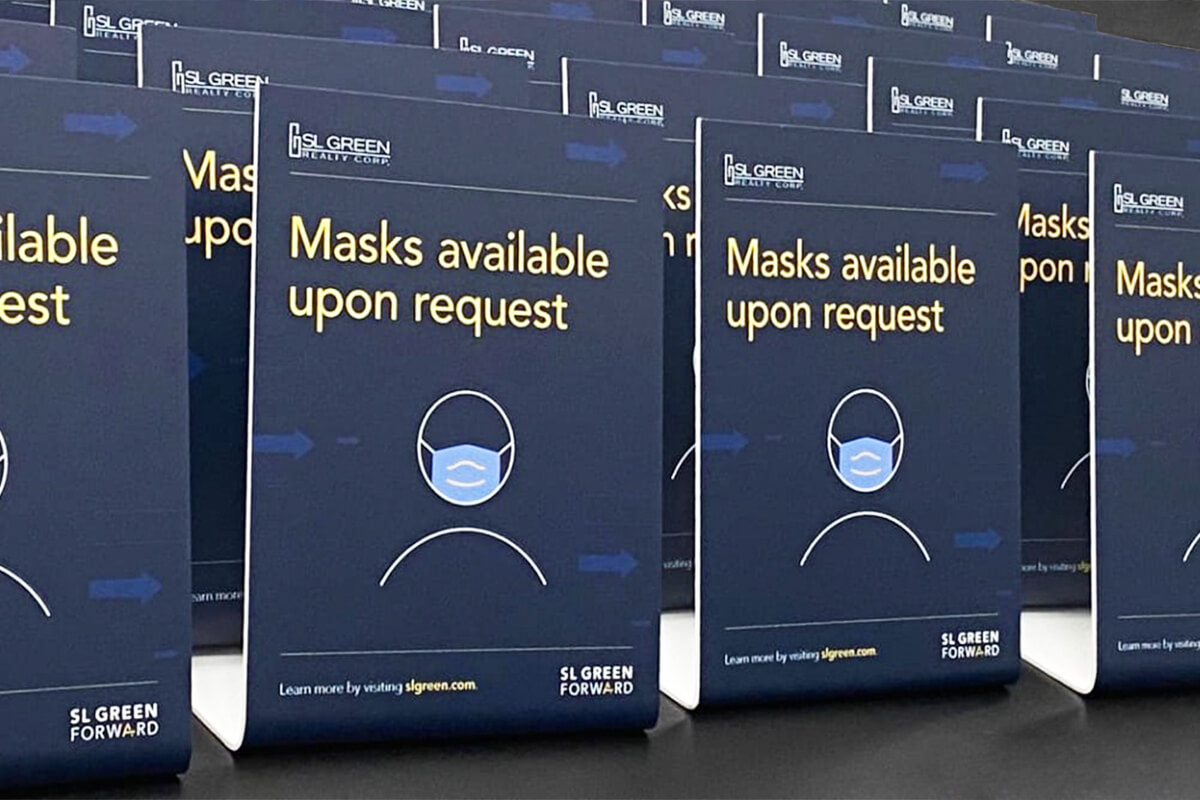
Saleena Aggarwal: We started off with a logo and brand colors and really thought about how this branding for the program works with the current branding of the company, but at the same time, it’s different enough and sophisticated enough for their buildings to be branded with this new identity. We really had to communicate through signage and directional pattern of the brand imagery. We used arrows a lot and experimented with them during our logo process. Once the client approved the logo, we started to create a pattern out of the arrows and that really became the language; very directional and very clear. Then we developed more assets that would communicate things very easily, like icons to indicate in certain areas of the building where you have to wear a mask, icons to show how to use the hand sanitizer, and proper ways to wash your hands. This was all to really help explain to people how to take the best measures so that everyone stays healthy inside the buildings.
David Kohler: With the audience that we’re speaking to, you’re dealing with people where English is a second language, particularly cleaning staff and other members of the support team. We really had to communicate visually as well as verbally. In these types of situations, you want people to understand something pretty quickly.
OTTO Brand Lab: What were the challenges you faced on the project?
Saleena Aggarwal: We really had to do a lot of trial and error with making signage from scratch for these really complex buildings that have really complicated pathways. No two buildings are the same. We had to figure out what’s working and what’s not. We even sent in the DCC team to install some of the printed materials early on in the process to see how well it works in the environment.
David Kohler: Nobody had ever done this before, certainly not in my lifetime or since the Spanish Flu. There’s no predetermined methodology. We have to go in with what we know will work based on all of our experience. The rules were changing, the timing, the laws. Everything was changing. We were all learning together. We were learning from the governor’s office on down to what the plans were and what was going to need to happen and by when. That was the biggest challenge. It was constantly in a state of flux. We had to keep adapting based on laws and rules changing and being written while we were doing this. The rules for the opening were being written until a week before opening.
Andy, who runs our environmental branding group, has done a lot of work specifically for hospitals and many other organizations like that, so it was also utilizing a lot of that experience to guide us. We really had to fall back on our experience working with museums, as well as Andy’s experience in emergency situations guiding mass groups of people in public areas.
Real estate has been hit very hard by the virus. It’s changed the way people work and the way they interact. It’s quite substantial. You have another issue where you have the building itself that is owned by SL Green, but the tenants also have rights in their spaces, and they have to manage their spaces. They’re independent in that sense, so you have to guide them but also work within their systems.
DCC went in and did the test fit for us, and we learned quite a bit from that. Once we went out there and saw it, a lot changed. SL Green has very tasteful high-end buildings, so you can’t treat them the same way you treat a hospital. You don’t want to turn their work environment into an emergency room. You have to find that middle road by informing people, while making them comfortable, and doing it in a tasteful way that fits with the buildings.
Interested in reading more about the impact COVID-19 has had on brands? Read our blog post, A Campaign to Help the Homeless During the Pandemic. Don’t forget to subscribe below to stay up date on all of the happenings at OTTO Brand Lab.
In this demanding marketplace, it is becoming increasingly difficult to get clients to take a creative risk.
Most companies wish to be unique but few are comfortable being different. Everyone wants to be a market leader but nobody wants to take a chance. Once we agree to take a creative leap, the rewards always outweigh the initial agita. Below is an entry to help nudge all of you reluctant communicators over the proverbial hump of fear.
A while back, James Souttar, wrote an article for Critique magazine called, “Eye of the Mind.” In the article, James cites the proliferation of scientific evidence, to support the theory that your brain is drawn to original, creative thinking. Rather than storing everything you encounter, your brain, similar to a sieve, sorts through the information it receives. It weeds out the things that it deems useless and holds on to those it finds worthy of keeping. When it comes to visual information, the brain tends to remember things that are not obvious. It will analyze this information continuously, trying to figure out what is different or slightly off. In other words, it obsesses over originality.
This bodes well for designs that contain a planned visual wit. Take, for example, the illustration for The Economist (above). At first glance, the image seems to be an image of a brain. Upon closer observation, you realize that the brain folds are actually folded magazines. In the case of the Northwest Airlines, the diagonal stripe divides the letter “W”, forming a letter “N”— the company initials. The triangle in the upper left also represents a compass needle, pointing northwest. This is the kind of stuff that your brain fixates on. You could walk past The Economist cover at a newsstand (unfortunately, you can’t walk past the Northwest logo anymore) and the back of your mind knows that there’s something else going on, even if your conscious mind simply thinks that it’s interesting.
As communication professionals, this is a valuable lesson. If you want to get someone to remember your message, a visual twist or a unique approach is a great way to capture the viewer’s attention. It also reminds us to get to the point or our message will slip through with the rest of the clutter, unnoticed.
.jpg)




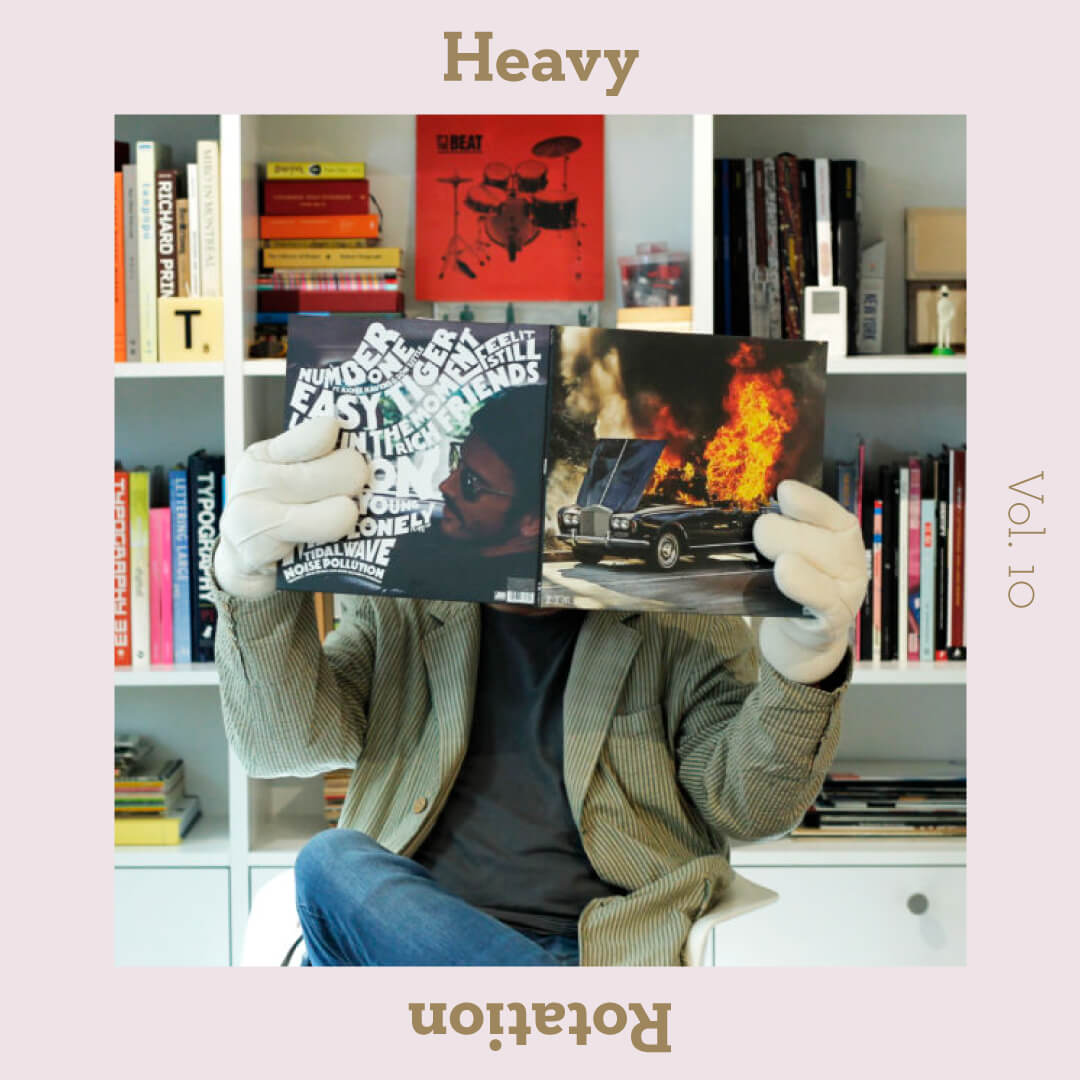
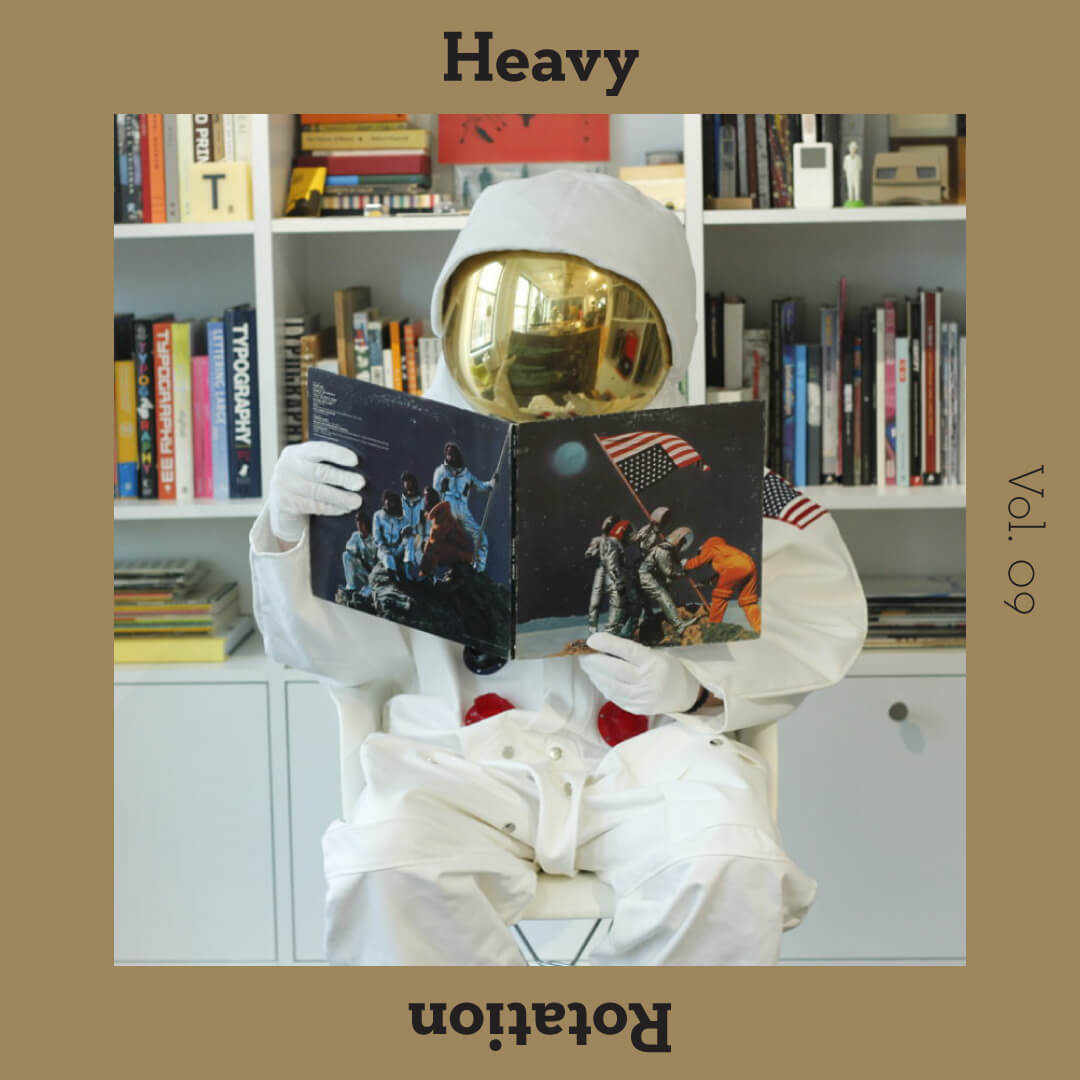
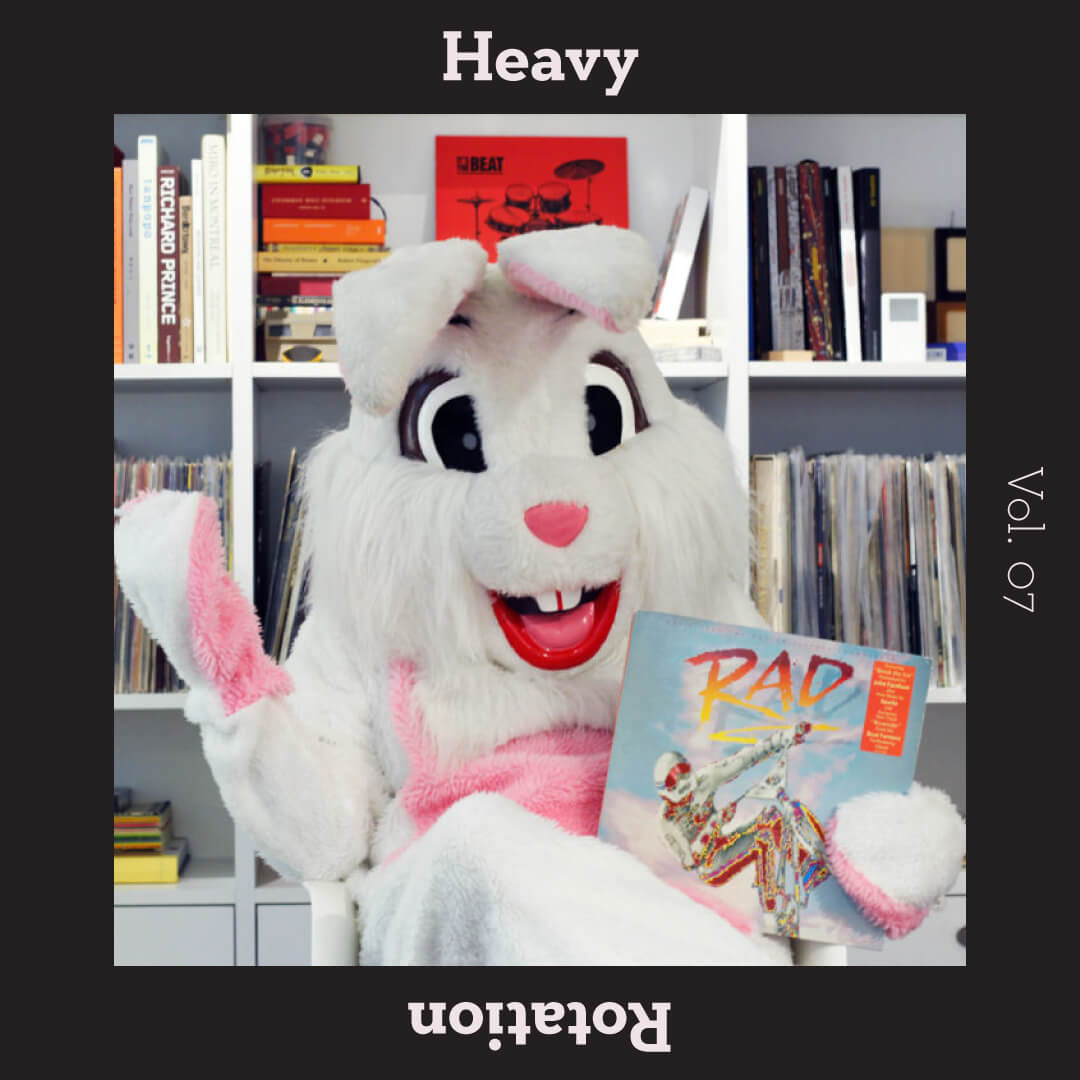
The perfect soul and jazz mix to help you deal with those end of the summer blues.
Tracklist
In honor of our San Francisco summer, here's some gloomy dark-wave, with just a sparkle of hopefulness to it. And an ultimate guilty pleasure.
Feeding Tony’s Yacht Rock jones we are featuring a special streaming summer mix.
Featuring:
“whatever you wanna call it… It’s smooth as hell and makes me smile.”
-Shawn Lee
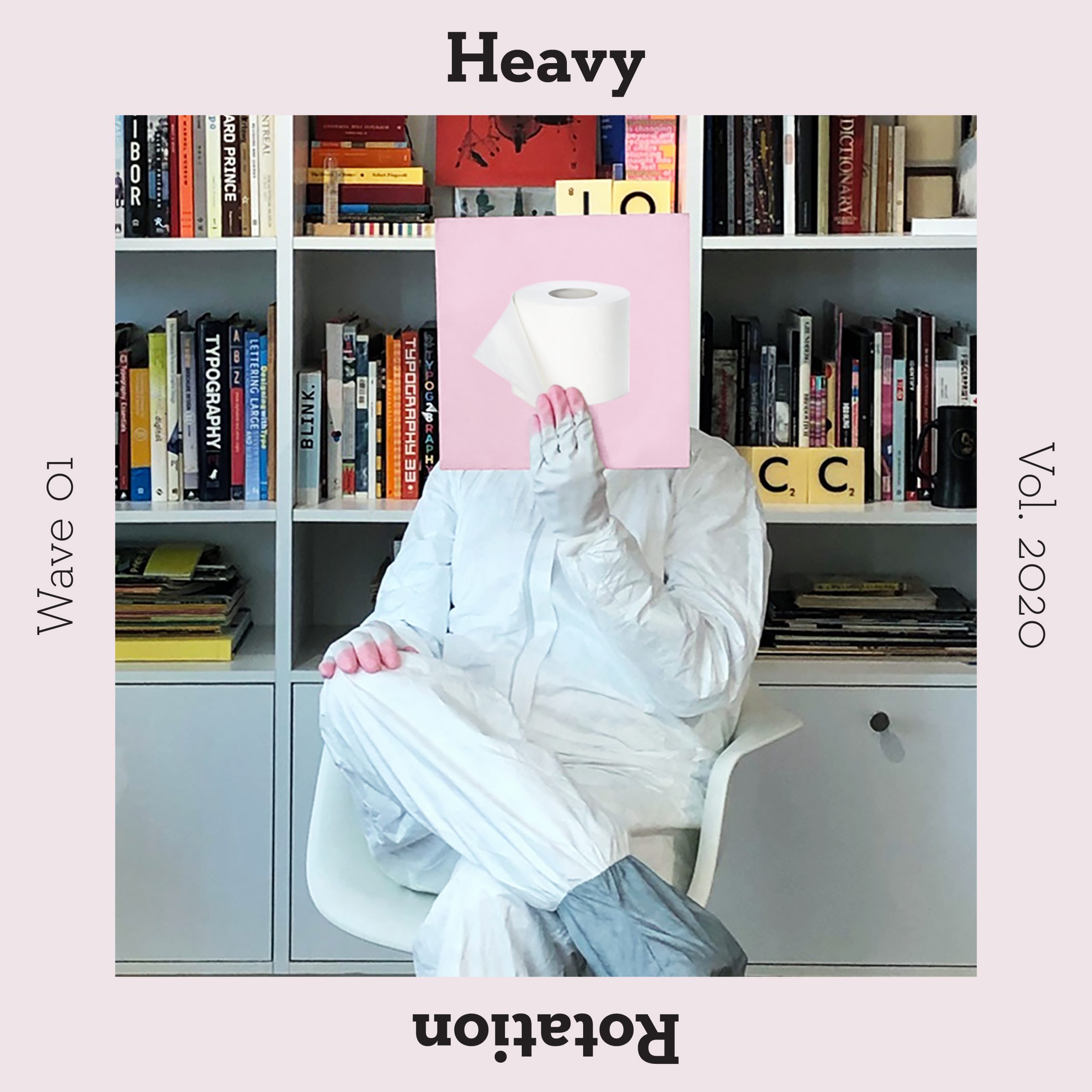
We love our neighborhood block! Thanks to Abracadabra NYC for the rad space suit!
facebook.com/AbracadabraNYC/
instagram.com/abracadabranyc/
twitter.com/NYCABRACADABRA